The Psychology of Interior Design: Why Your Room Affects Your Mood
Color Psychology
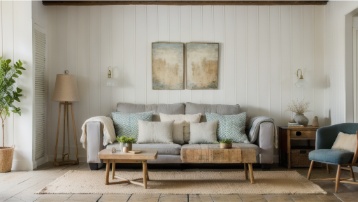
Colors have measurable effects on psychological state, though the relationships are more nuanced than popular accounts suggest. Warm colors — reds, oranges, warm yellows — increase arousal and energy. They're activating, which can be energizing in social spaces and overstimulating in spaces meant for rest. Cool colors — blues, greens, certain purples — have calming, stress-reducing effects. Neutrals — warm whites, creams, taupes — create psychological spaciousness without strong directional influence.
The https://rentry.co/qzk4merq practical application: bedrooms benefit from cool or neutral palettes that support the shift toward rest. Home offices benefit from moderate stimulation — a neutral dominant with a green or blue accent performs better than either pure white (understimulating) or vivid red (overstimulating). Living rooms, as social spaces, can accommodate warmer accents that support energy and conversation.
Saturation matters as much as hue. Highly saturated colors are more arousing than muted ones at the same hue. A deep, muted terracotta has a different psychological effect than a vivid orange-red, even though both are warm. The earthy, desaturated palettes trending in 2025 interior design are psychologically aligned with their popularity — they're warm and grounding without being stimulating.
Space, Clutter, and Cognitive Load
Cluttered environments impose measurable cognitive costs. Research has consistently found that physical clutter competes for attention, increases cortisol (the stress hormone), and reduces the ability to focus. The experience of being in a cluttered room is not merely aesthetic displeasure — it's an actual cognitive burden.
This is the scientific basis for the well-being benefits of minimalism — not as an aesthetic preference but as a functional approach to reducing environmental cognitive load. A room with fewer objects, clear surfaces, and organized storage is a room where the visual field makes fewer demands on the attention system. The brain has more available bandwidth for whatever the room is designed to support.
The practical design implication: storage is wellness infrastructure. Rooms that provide adequate, accessible storage for everyday objects make it possible to maintain clear surfaces without constant effort. Designing storage into a room — baskets, closed cabinetry, under-bed storage — is not merely organizational; it's psychological.
Light and Serotonin
Natural light exposure is directly tied to serotonin production — the neurotransmitter most associated with mood regulation and wellbeing. Insufficient natural light is a significant contributor to the mood effects of winter in high-latitude climates, and interior design that maximizes natural light access has measurable wellbeing benefits year-round.
Practical applications: keep window treatments light and unobstructive during daylight hours. Use mirrors to bounce natural light deeper into a room. Choose lighter wall colors in rooms with limited natural light. Ensure that the surfaces visible from the primary seating positions — the views your eyes rest on most often — include natural light sources.
Artificial light color temperature affects mood through circadian rhythm mechanisms. Blue-spectrum light (5000K+) suppresses melatonin and signals wakefulness to the brain. Warm light (2700-3000K) supports the natural evening shift toward rest. A home where all artificial light is cool-spectrum creates an environment that works against the body's natural rhythms — which is why warm lighting in bedrooms and living rooms, and brighter task lighting only where focused work happens, aligns with psychological health.
Natural Elements and Stress Reduction
The affinity humans have for natural environments — what biologist E.O. Wilson called biophilia — has a measurable stress-reducing effect when natural elements are incorporated into interior design. Plants, natural materials (wood, stone, linen, jute), views of or references to natural landscapes, and water features all reduce cortisol and improve subjective wellbeing measures.
The biophilic design trend in 2025 interior design is not merely aesthetic. Incorporating a significant plant, choosing natural-fiber textiles, using stone or wood countertops, and selecting earthy palettes that reference natural environments all have psychological justification beyond their visual appeal.
Using AI Room Design to Test These Psychological Levers
The practical challenge of applying psychological design principles is the same as the practical challenge of applying aesthetic ones: you can't know how your room will feel until it's changed, and changing it is expensive and effortful. AI room design tools address this by letting you visualize the psychological levers before pulling them.
Want to test whether a calmer, more muted palette would reduce the stress you feel in your home office? Visualize it first with AI Room Decor. Considering adding more natural elements — a large plant, a rattan basket, a wooden shelf — to create biophilic benefits? See how they look in your specific room before buying. Wondering if decluttering and going more minimalist would actually feel better? Test the visual outcome before committing to the significant effort of a full declutter and redesign.
The room you live in matters. Its design affects your mood, your focus, your sleep, and your stress levels every day. Understanding why and designing accordingly — supported by tools that let you visualize the changes before making them — is one of the highest-return investments available in daily wellbeing.